

October 9, 2026/
Gifting Shares to Family Members: Capital Gains Tax, Holdover Relief and Family...

A director may borrow money from their company and pay interest on the balance, assuming this prevents further tax consequences. In practice, two separate tax regimes can apply to an overdrawn director’s loan account, and paying interest generally deals with only one of them.
For owner-managed companies in particular, it is important to distinguish between Section 455 tax payable by the company and the beneficial loan rules affecting the director personally.
Paying interest on a director’s loan does not prevent a Section 455 tax charge where the relevant loan remains outstanding beyond the statutory deadline. Section 455 tax is determined principally by the outstanding loan balance and when it is repaid. Paying sufficient interest may instead prevent or reduce a separate taxable benefit arising under the beneficial loan rules.
Section 455 of the Corporation Tax Act 2010 broadly applies where a close company makes a loan or advance to a participator, typically a shareholder-director, and the relevant amount remains outstanding more than nine months after the end of the accounting period in which the loan was made.
For loans made on or after 6 April 2026, the Section 455 tax rate is 35.75%, increased from 33.75% for loans made between 6 April 2022 and 5 April 2026.
This is particularly important for directors and shareholders because a substantial overdrawn director’s loan account can create a significant cash-flow cost for the company.
For example, if a company makes a £40,000 loan to a shareholder-director after 6 April 2026 and the full amount remains subject to Section 455 tax, the potential liability would be:
£40,000 × 35.75% = £14,300
The company may therefore face a significant tax payment even where the director intends to repay the loan later.
Relevant loans and Section 455 liabilities are generally reported as part of the company’s Corporation Tax Return, including the CT600A supplementary pages where required.

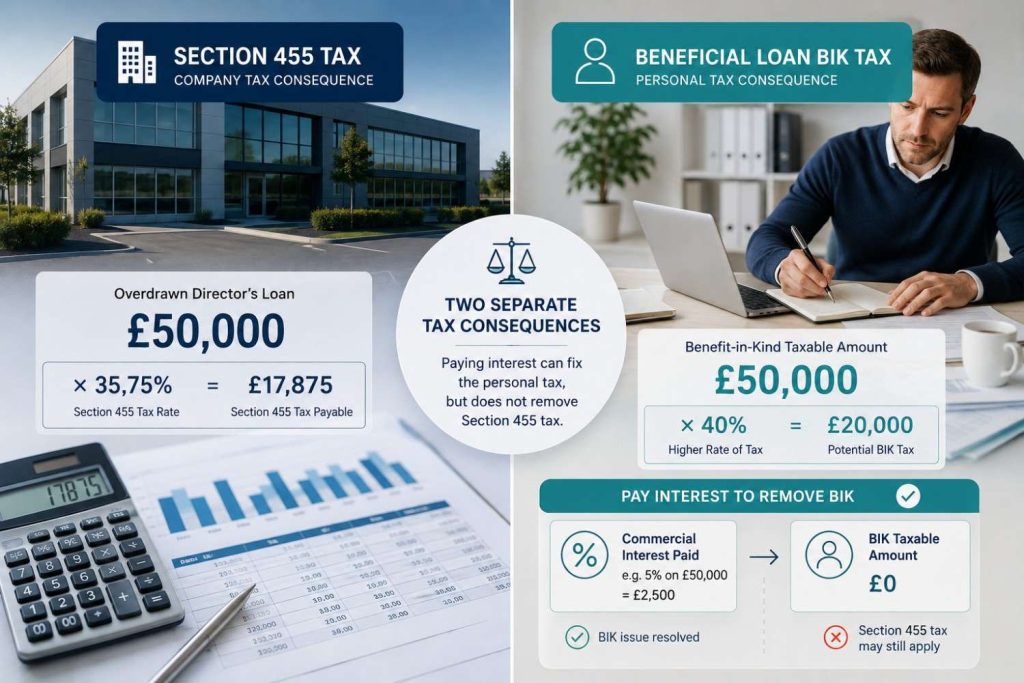
No. Paying interest does not, by itself, prevent Section 455 tax.
This is one of the most important distinctions for directors to understand.
Section 455 is concerned with the loan or advance made to the participator. If the relevant principal remains outstanding beyond the applicable deadline, the company can still face a Section 455 charge regardless of whether the director has paid interest.
Interest is relevant primarily because a director’s loan can also fall within the beneficial loan benefit-in-kind rules.
The two tax issues should therefore be considered separately:
Paying interest can address the second issue without eliminating the first.
A separate tax issue can arise where a company provides a director with an interest-free or low-interest loan.
Broadly, where the combined outstanding balance of qualifying loans does not exceed £10,000 at any point during the tax year, an exemption from the beneficial loan rules may apply.
Where the exemption does not apply, a taxable benefit can arise if the interest charged is below HMRC’s official rate.
For the 2026/27 tax year, HMRC’s official rate of interest is 3.75%.
Where sufficient interest is paid in accordance with the relevant rules, the taxable beneficial loan amount may therefore be eliminated or reduced. If insufficient interest is charged, the benefit may result in an Income Tax liability for the director and a Class 1A National Insurance liability for the employer.
The key point is that avoiding a beneficial loan charge does not automatically avoid Section 455 tax.
A director could therefore pay sufficient interest to deal with the beneficial loan position while the company still faces a substantial Section 455 liability because the underlying loan remains outstanding.
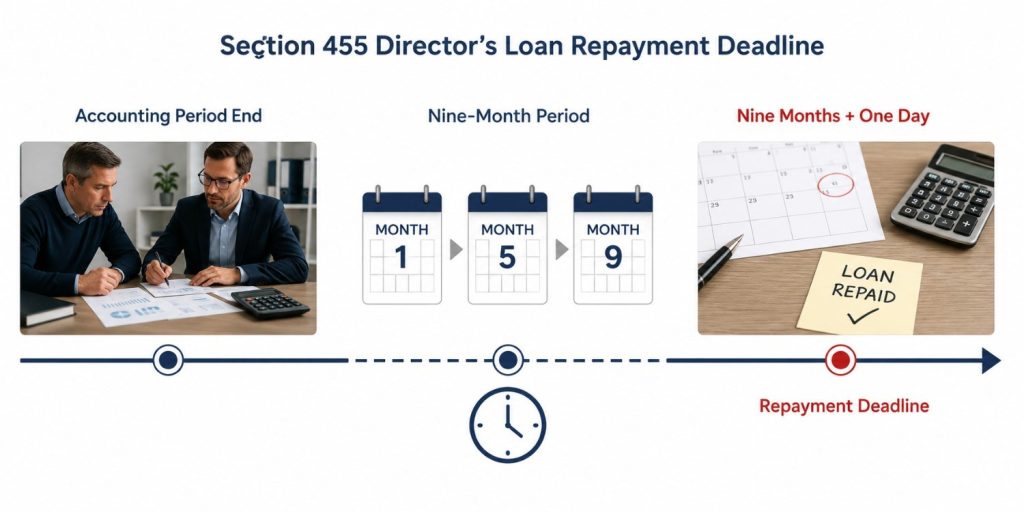
Timing is critical.
Where the loan is repaid, released or written off within nine months of the end of the accounting period in which it was made, relief can generally prevent the associated Section 455 tax from becoming payable, subject to the detailed rules.
Where the loan remains outstanding beyond that point, Section 455 tax can become payable.
If the loan is subsequently repaid, released or written off, the company can normally claim relief for Section 455 tax previously paid. However, there can be a considerable delay before the company receives the benefit of that relief.
A repayment claim generally cannot take effect until nine months and one day after the end of the Corporation Tax accounting period in which the repayment, release or write-off occurred.
Section 455 should therefore not simply be dismissed as “refundable tax”. It can tie up a meaningful amount of company cash for a significant period.
Directors should be cautious about temporarily clearing an overdrawn loan account shortly before the Section 455 deadline and then withdrawing the money again.
Specific anti-avoidance provisions can apply where loans are repaid and new amounts are subsequently borrowed. These include rules commonly referred to as the 30-day rule, as well as provisions dealing with arrangements involving larger loans and intended further withdrawals.
Simply transferring money into the company shortly before the deadline and taking it back out again may therefore fail to achieve the expected Section 455 tax result.
The commercial substance and timing of the transactions should be considered rather than looking only at the director’s loan account balance on a particular day.
Gifting Shares to Family Members: Capital Gains Tax, Holdover Relief and Family...

Sole Traders and Landlords Earning Over £30,000 Must Prepare for April 2027:...

SSAS Pension: Tax Benefits, Property Investment and Rules for Directors Home Blogs...

Business Property Relief: What the £2.5m Cap Means for You Home Blogs...
Business & Tax News and Developments September 2026 Home News Business &...

Right to Work Checks Change on 1 October 2026: What Employers Must...
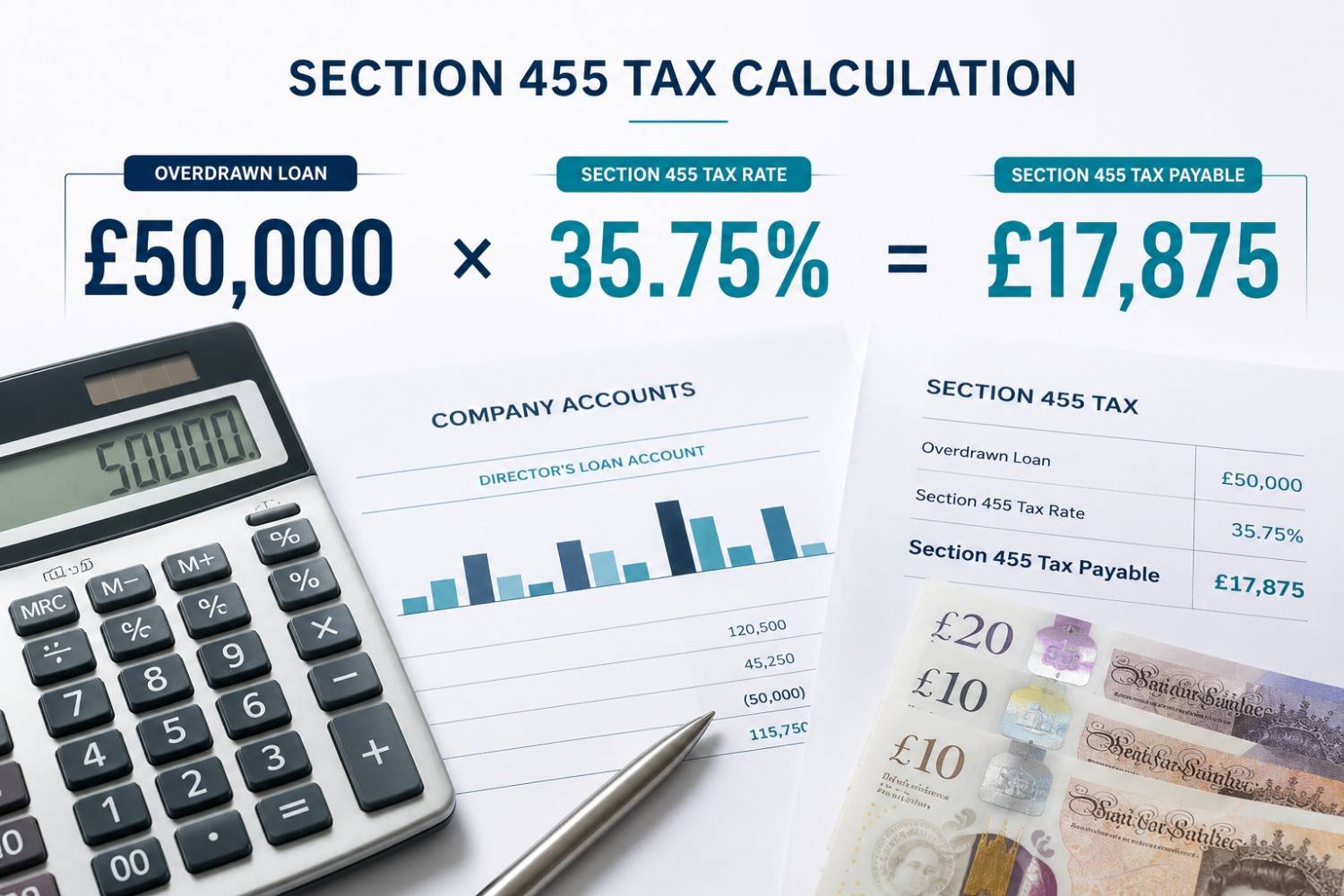
Suppose a shareholder-director has a £50,000 overdrawn director’s loan account and pays interest to the company at the appropriate HMRC official rate.
Paying sufficient interest may address the beneficial loan position.
However, if the £50,000 remains outstanding beyond the relevant Section 455 deadline, the company may still face a Section 455 charge.
For a loan made on or after 6 April 2026:
£50,000 × 35.75% = £17,875
The fact that the director has paid interest does not remove the Section 455 liability.
This illustrates why director’s loan planning should consider Section 455 tax, benefit-in-kind exposure and repayment strategy together, rather than treating the payment of interest as a complete solution.
Director’s loan accounts often become problematic gradually rather than through one large withdrawal. Personal expenses paid by the company, drawings exceeding declared dividends, or money taken before sufficient distributable reserves are confirmed can all contribute to an overdrawn balance.
Waiting until the annual accounts are prepared can leave directors with limited time to address the position efficiently.
A better approach is to review substantial director’s loan balances before the company’s year end and again well before the nine-month-and-one-day repayment deadline.
The review should consider the amount and timing of the loan, whether the director is also a shareholder or participator, available distributable reserves, dividend and remuneration planning, interest charged, benefit-in-kind implications and the director’s ability to make a genuine repayment.
Particular care is required where a proposed repayment will be funded through a dividend, salary, bonus or subsequent borrowing. Each route can have different tax, National Insurance, cash-flow and company law consequences.
Paying interest on an overdrawn director’s loan account and dealing with Section 455 tax are two separate issues.
Interest paid at an appropriate rate may prevent or reduce a beneficial loan tax charge for the director. It does not, however, automatically remove the company’s Section 455 liability where the underlying loan remains outstanding beyond the relevant deadline.
For loans made from 6 April 2026, the Section 455 tax rate is 35.75%, making early review of significant director’s loan balances even more important.
If your director’s loan account is overdrawn, dealing with it before the repayment deadline provides considerably more scope to assess the available options and avoid an unnecessary tax and cash-flow problem.
Naail & Co can review your director’s loan account, calculate the potential Section 455 tax exposure and advise on the interaction between repayment, interest, dividends, remuneration and benefit-in-kind rules.
Early advice can be particularly valuable where the loan balance is substantial or the nine-month repayment deadline is approaching.
Get in touch with Naail & Co to book your free initial consultation.
Monday – Friday
9:00 am – 5:30 pm
Section 455 tax is a Corporation Tax charge that can arise when a close company lends money to a participator, typically a shareholder-director, and the loan remains outstanding beyond the relevant deadline. Broadly, the charge becomes payable if the loan is not repaid within nine months and one day after the end of the company’s accounting period. It is designed to discourage shareholders from extracting company funds through long-term loans rather than taxable remuneration or dividends.
Paying interest does not, by itself, prevent Section 455 tax from applying. The Section 455 charge is based on the relevant outstanding loan balance and its repayment timing. Paying sufficient interest can instead address a separate benefit-in-kind issue where a director receives an interest-free or low-interest loan. A director may therefore avoid a beneficial loan tax charge while the company remains liable for Section 455 tax.
For loans made on or after 6 April 2026, the Section 455 tax rate is 35.75% of the amount subject to the charge. For example, a £50,000 outstanding loan could create a Section 455 liability of £17,875. The rate was 33.75% for loans made between 6 April 2022 and 5 April 2026, so the date on which the loan or advance was made is important when calculating the liability.
A director should generally repay the relevant loan within nine months and one day after the end of the company’s accounting period to prevent Section 455 tax becoming payable. For example, for a company with a 31 March year end, the usual payment deadline is 1 January following that year end. Directors should review overdrawn loan accounts well before this date, as last-minute repayment arrangements can create additional tax and company law issues.
Yes, Section 455 tax can generally be reclaimed or relieved once the relevant director’s loan has been repaid, released or written off, subject to the statutory conditions. However, relief is not immediate. It generally cannot take effect until nine months and one day after the end of the Corporation Tax accounting period in which the repayment, release or write-off occurs. This delay can create a significant cash-flow cost for the company.
Potentially, yes. The £10,000 threshold does not provide a general exemption from Section 455 tax. It relates principally to the beneficial loan rules for employment tax purposes. A loan below £10,000 can still fall within Section 455 if the relevant statutory conditions are met. Directors should therefore avoid assuming that a loan is exempt simply because it falls below the benefit-in-kind threshold.
Section 455 tax and the beneficial loan charge are separate tax rules applying to different taxpayers. Section 455 is principally a company tax charge arising from certain outstanding loans to participators. The beneficial loan rules can create a personal Income Tax charge for the director where an employment-related loan is interest-free or carries insufficient interest, together with potential Class 1A National Insurance for the employer.
Not necessarily, because HMRC anti-avoidance rules can prevent temporary repayments from achieving the intended Section 455 tax result. Rules can apply where money is repaid and subsequently borrowed again, including provisions commonly known as the 30-day rule and rules concerning arrangements for further borrowing. Directors should obtain advice before using a short-term repayment strategy, particularly where the director’s loan account is substantial.
Common Section 455 tax mistakes include confusing interest payments with loan repayment, overlooking the nine-month-and-one-day deadline and assuming the £10,000 beneficial loan threshold provides a Section 455 exemption. Other problems include repaying and quickly re-borrowing funds, failing to monitor drawings during the year and overlooking the benefit-in-kind consequences of an overdrawn director’s loan. Regular review of the director’s loan account can prevent these issues.
A tax adviser can review the director’s loan account before key deadlines and identify legitimate options for managing the company’s Section 455 tax exposure. Depending on the circumstances, this may involve genuine repayment, dividend or remuneration planning, reviewing available distributable reserves, calculating beneficial loan interest and considering the timing of transactions. Advice should be obtained early, as options can become significantly more limited once the Section 455 payment deadline approaches.


Gifting Shares to Family Members: Capital Gains Tax, Holdover Relief and Family Succession Planning Home Blogs Gifting Shares to Family...

Business Exit Planning: What Owners Should Check Home Blogs Business Exit Planning: What Owners Should Check Table of Contents Share...

Self Assessment for Company Directors: New Reporting Rules for 2025/26 Home Blogs Self Assessment for Company Directors: New Reporting Rules...


Subscribe to our newsletter to receive our weekly feed.

69-71 Lambeth Walk London SE11 6DX
Monday – Friday 9:00 am – 5:30 pm
Subscribe to our newsletter
Follow us
Download from
Services
DROP US A LINE
Copyright 2024 Naail & Co | Designed by Orion Global Consulting. | Naail & Co is the trading name of Naail & Co Ltd | Company registration number 08606377 | VAT registration number 170 3380 31


